file library
Seafile
Store, sync, and share files on your own server. Add OnlyOffice when those files also need browser-based editing.
Alpha · selected public modules
A Platform Zero module is more than an installer. It brings the runtime definition, configuration templates, dependencies, tests, and component metadata a service needs to join the generated stack. Your site manifest selects only the modules you want and pins their exact Git revisions. This page is a practical tour; the source catalogue is the complete, current inventory.
Alpha software: module contracts, catalogue entries, and upgrade paths can change. Use exact revisions, validate the generated Podman bundle before activation, and test a full restore before trusting a deployment with important data.
Coordinate
Combine only the pieces your team needs, from a shared file library and browser editing to an incident room or public update feed.
Store, sync, and share files on your own server. Add OnlyOffice when those files also need browser-based editing.
Organize internal documentation into shelves, books, chapters, and pages instead of another unstructured folder.
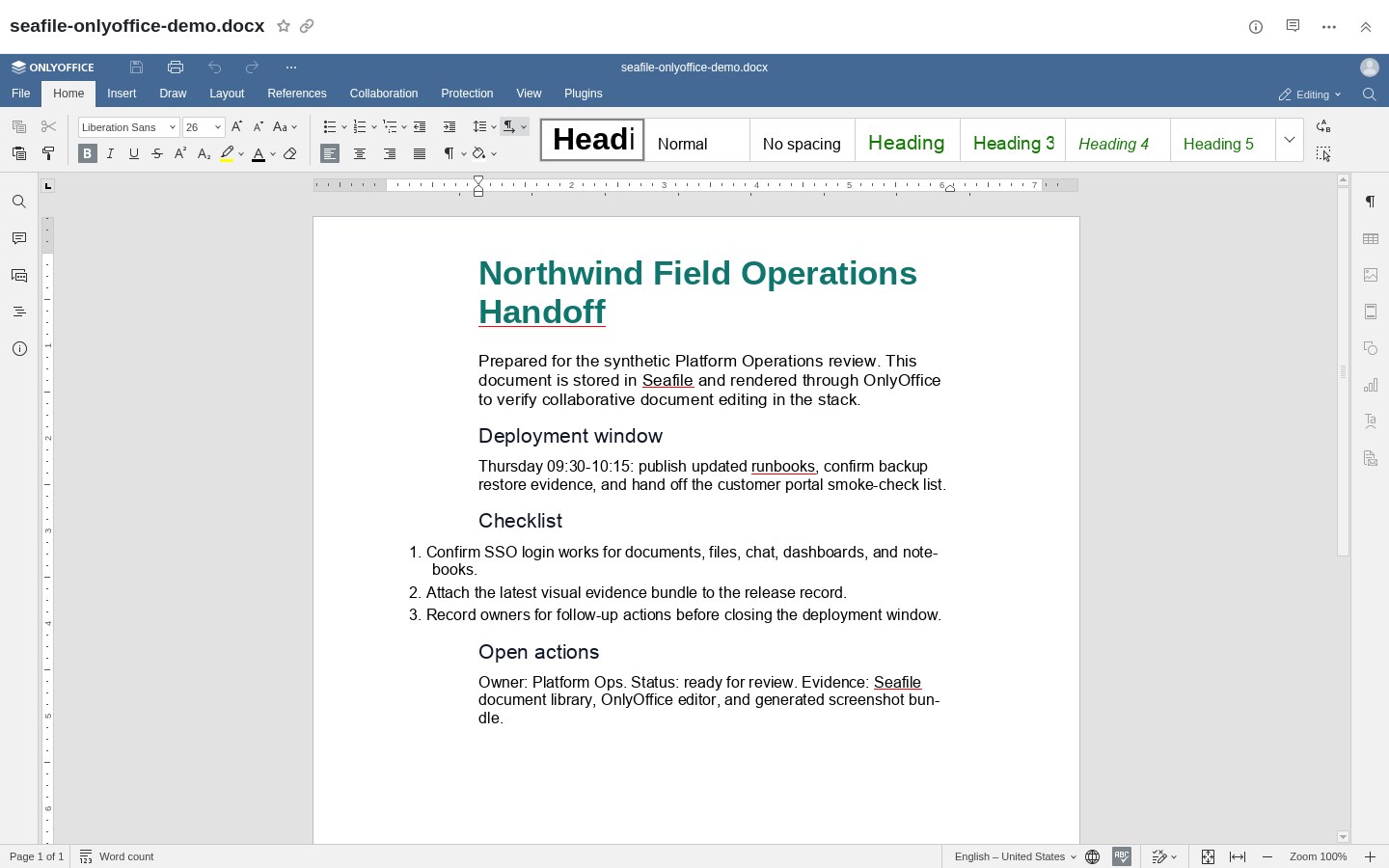
Edit Word, spreadsheet, and presentation files in the browser while the documents remain in private storage.
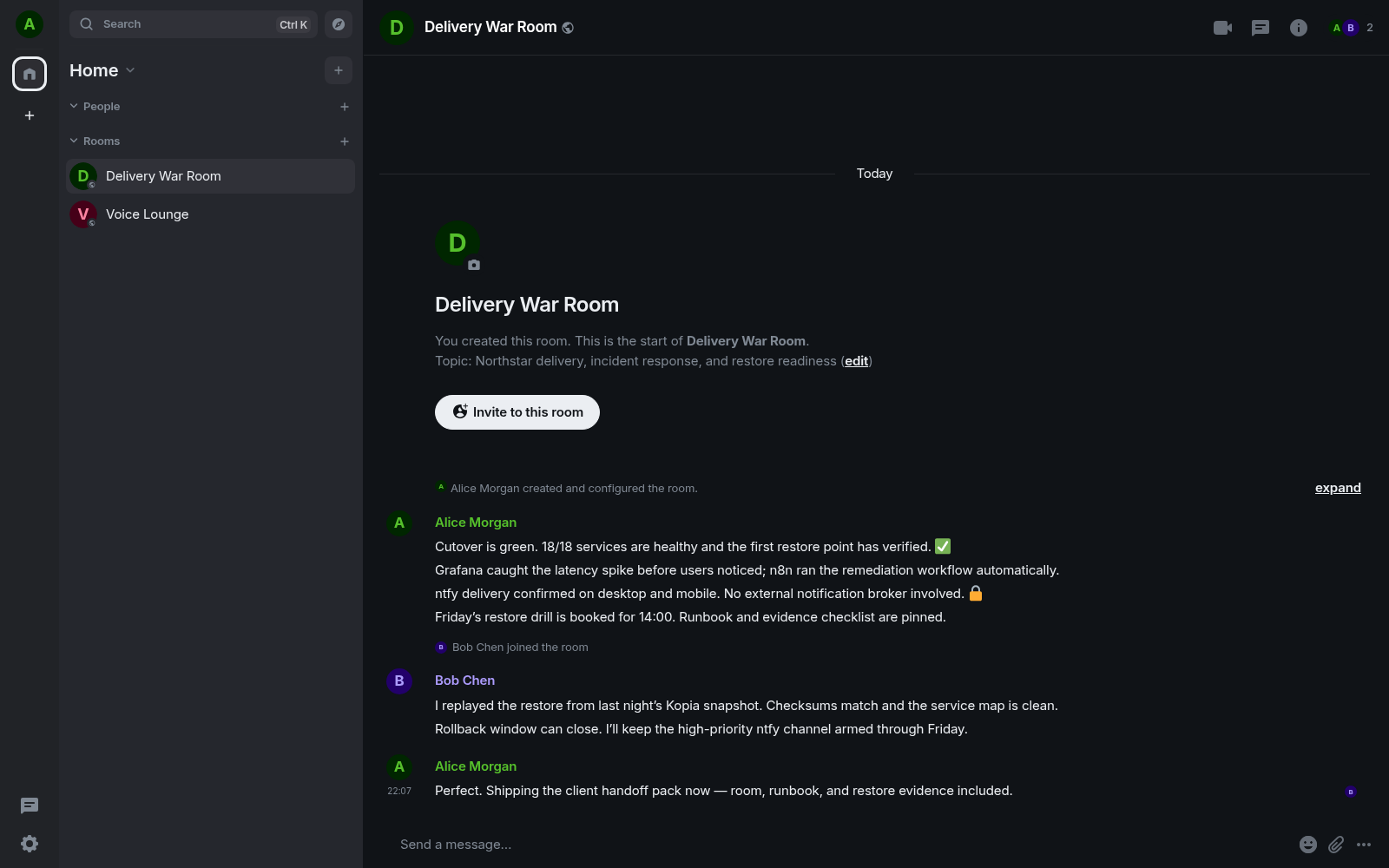
Host Matrix rooms, direct messages, files, federation, and calls. The captured room keeps a cutover and restore handoff in one thread.
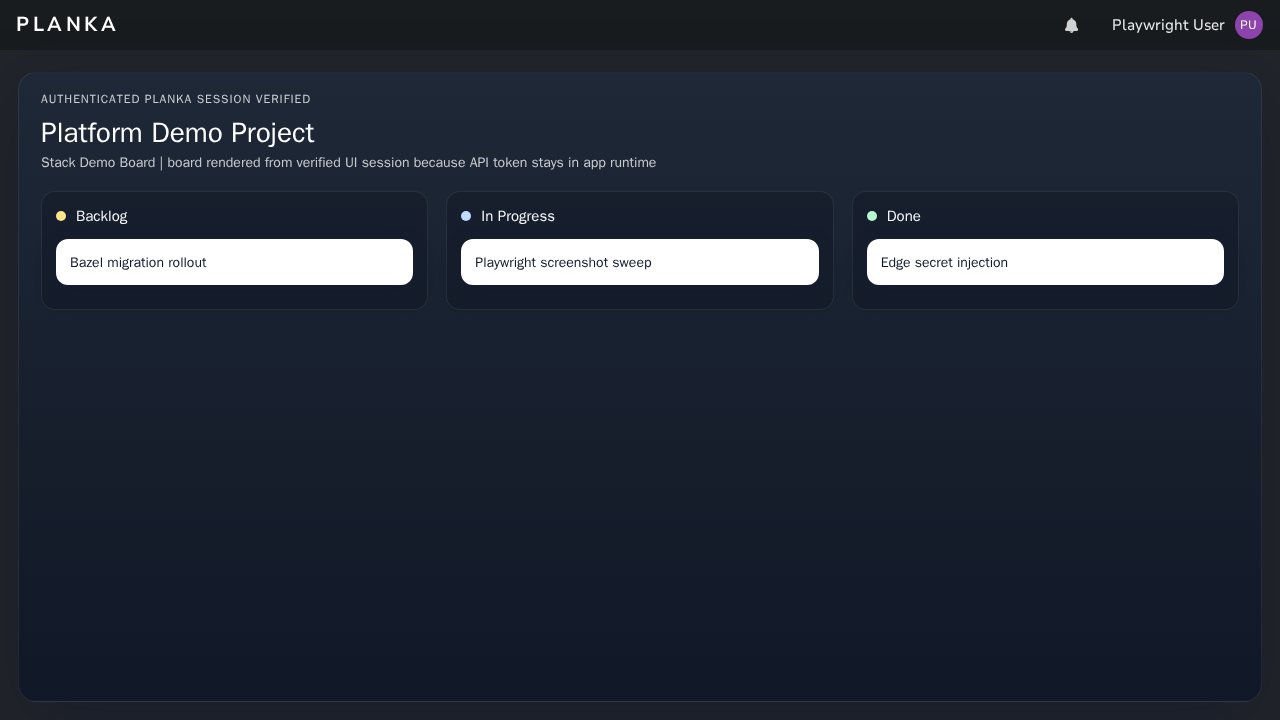
Track projects on boards with lists, cards, due dates, labels, and assigned owners.
Give people webmail, shared calendars, and address books through one browser interface.
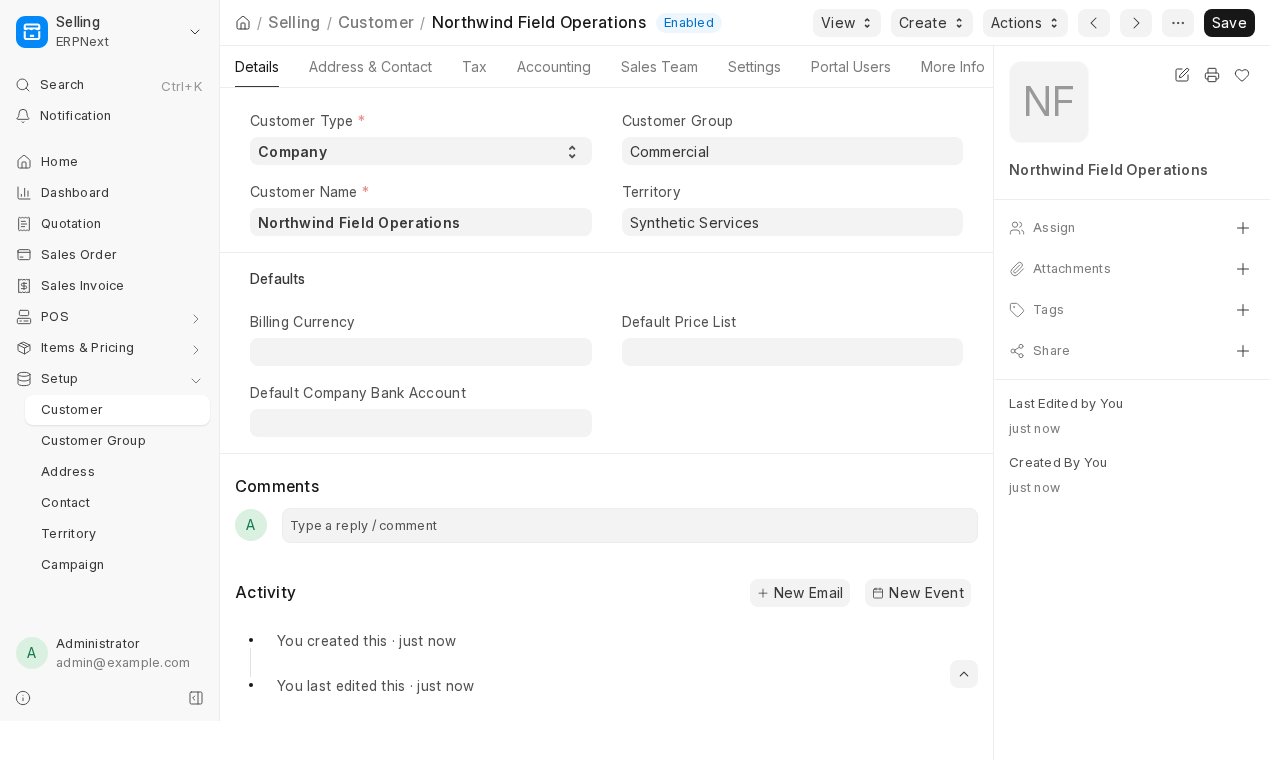
Run structured CRM, accounting, inventory, and internal approval workflows without moving the records to a SaaS account.
Assign recurring maintenance and household or team routines, with owners and schedules everyone can see.
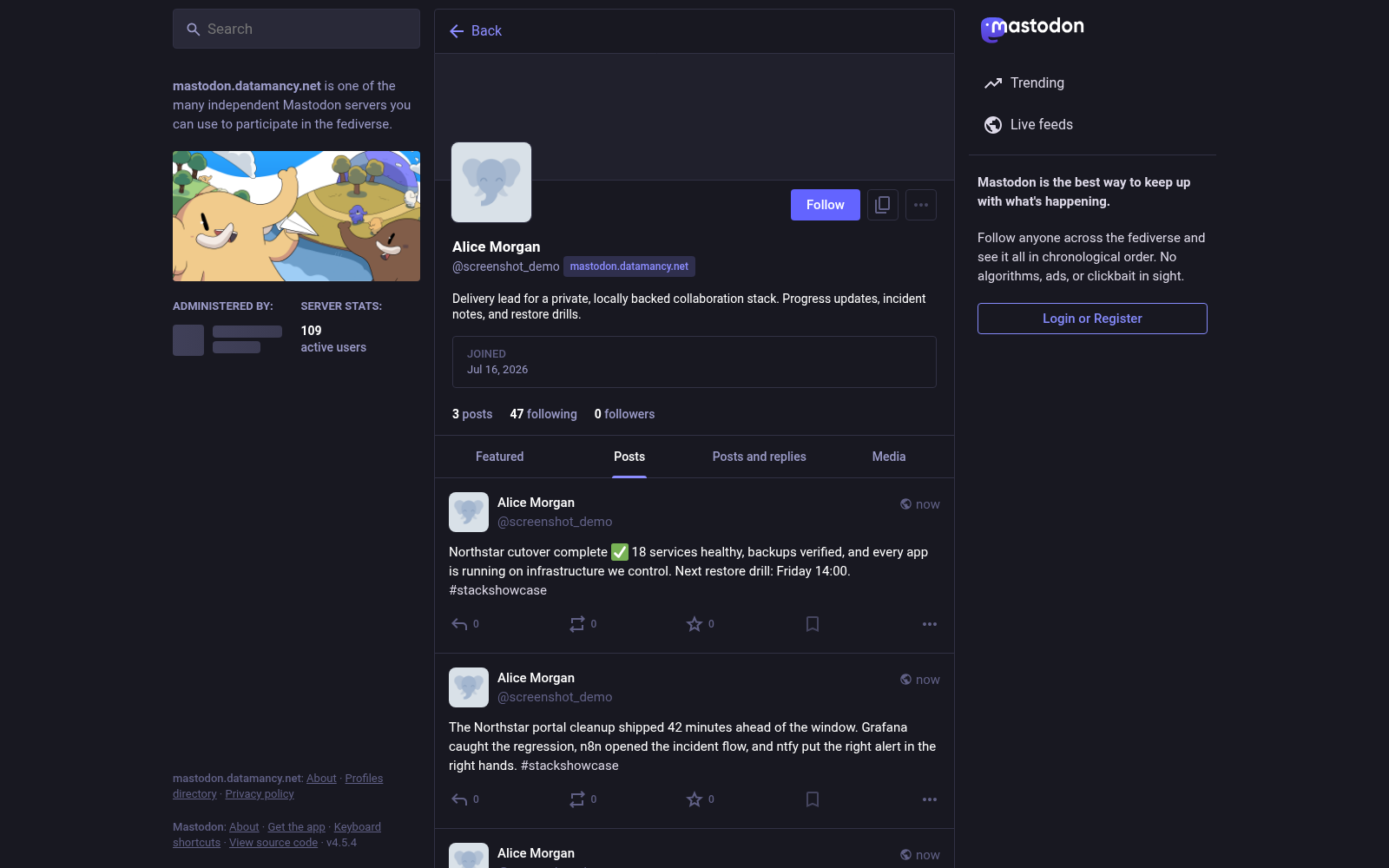
Run a federated social presence on your own domain. The captured profile publishes concrete delivery and restore updates.
Operate
Identity, metrics, dashboards, alert delivery, and backups become parts of the same deployment instead of separate afterthoughts.
Manage users and groups once, then give each OIDC client an explicit redirect path and required credentials.
Scrape service and host metrics into one queryable time-series store for health checks, dashboards, and alerts.
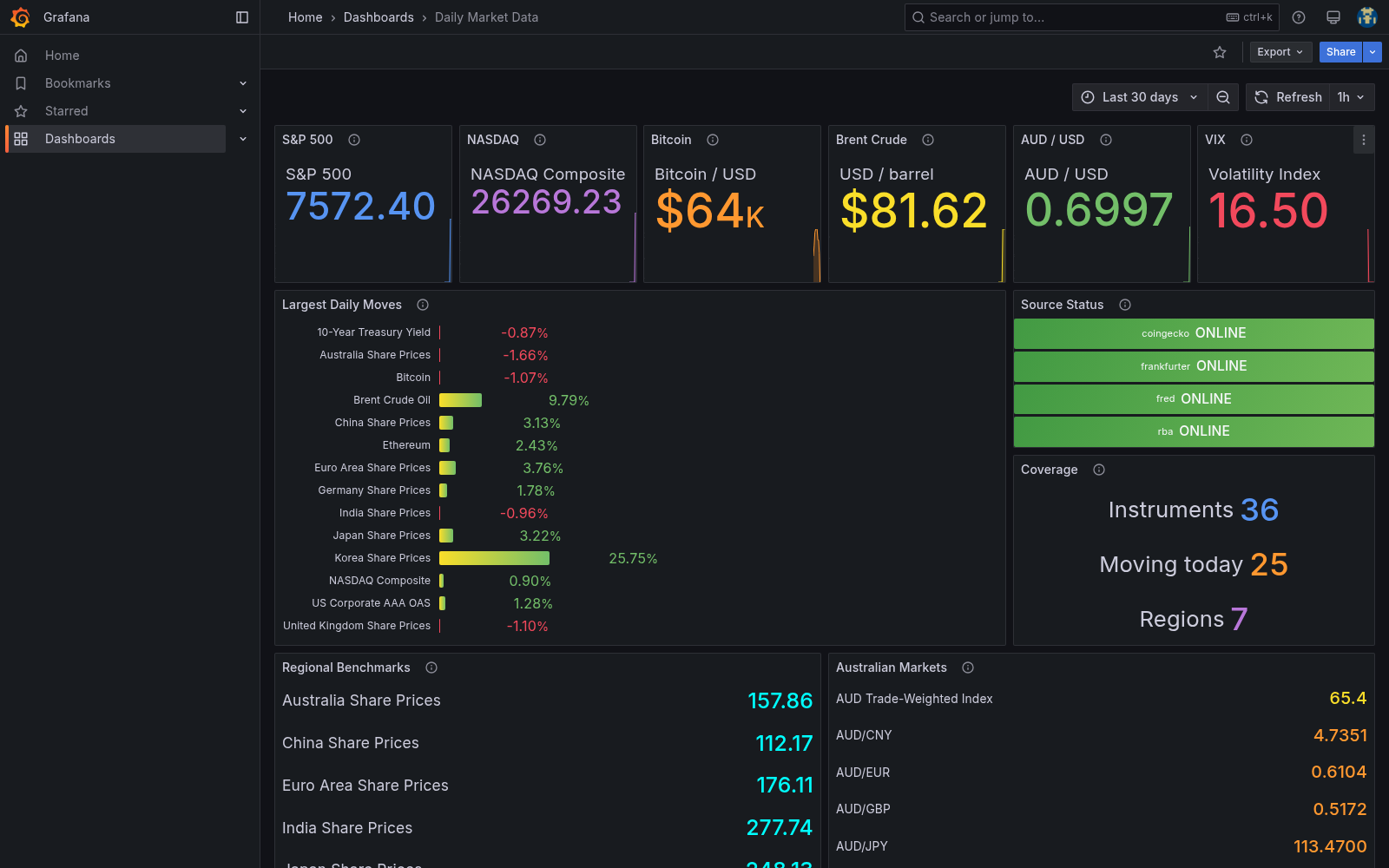
Turn metrics and application data into dashboards. This one tracks 36 market instruments and the health of all four source feeds.
Group related alerts, route them to the right destination, and silence expected noise during a maintenance window.
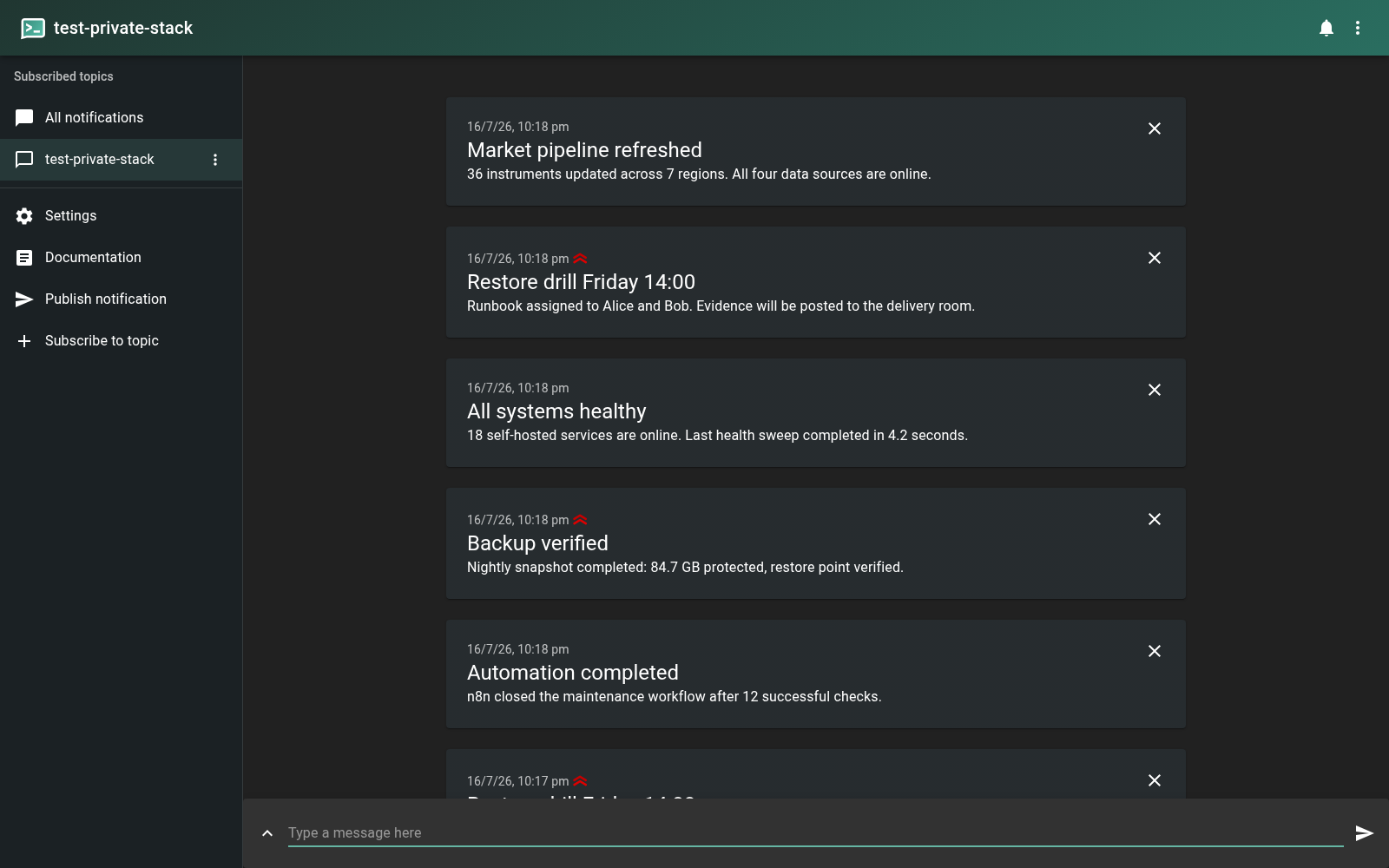
Send stack events to desktop and mobile through a private topic you operate, including high-priority restore and incident alerts.
Create encrypted, deduplicated snapshots, set retention policies, and verify that a useful restore point actually exists.
Build
Keep repositories, automation, and interactive compute close to the data while separating the workloads that can create containers of their own.
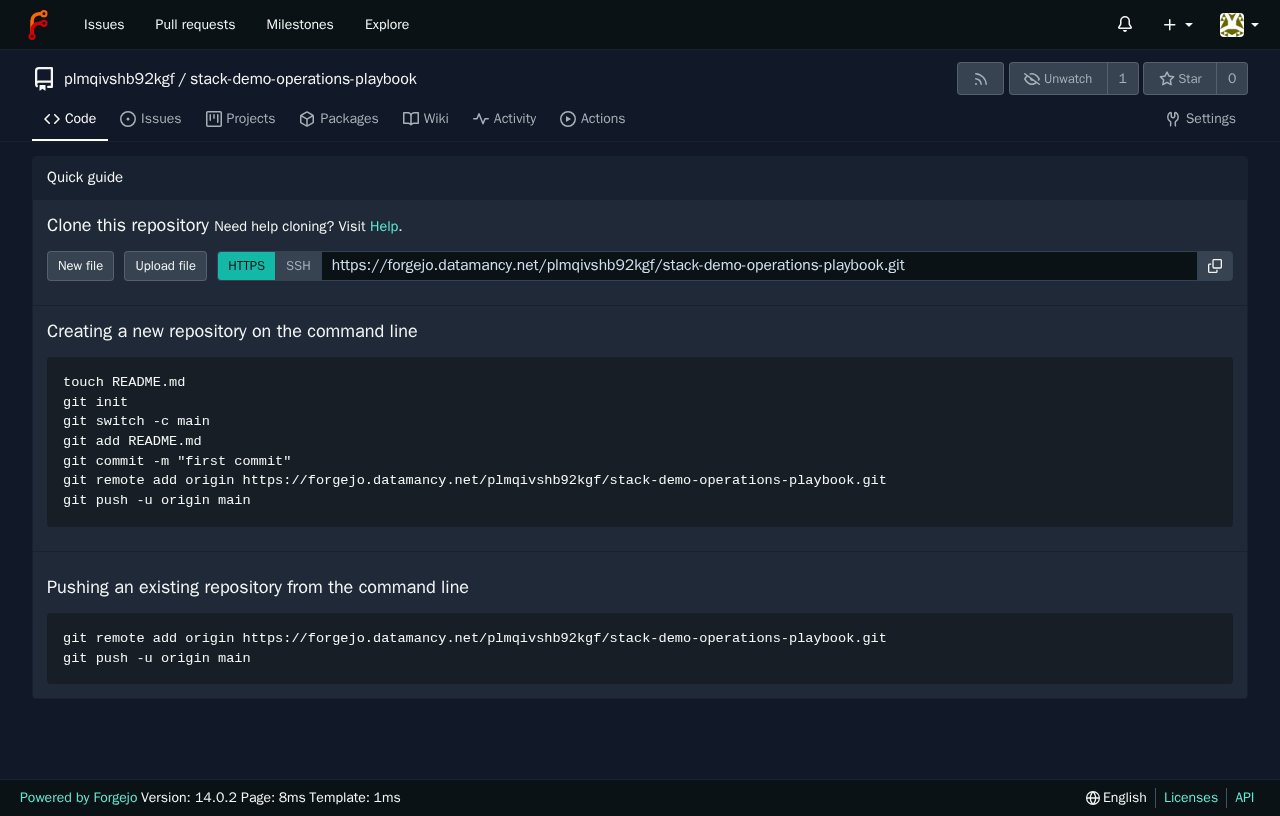
Host private repositories, issues, pull requests, releases, and team review on infrastructure you control.
Run repository jobs through a dedicated rootless user and Podman socket instead of granting CI access to the main application runtime.
Work through data, experiments, and repeatable technical notes in an interactive Python notebook.
Give multiple people separate notebook sessions while the hub’s workload control stays outside the main Podman domain.
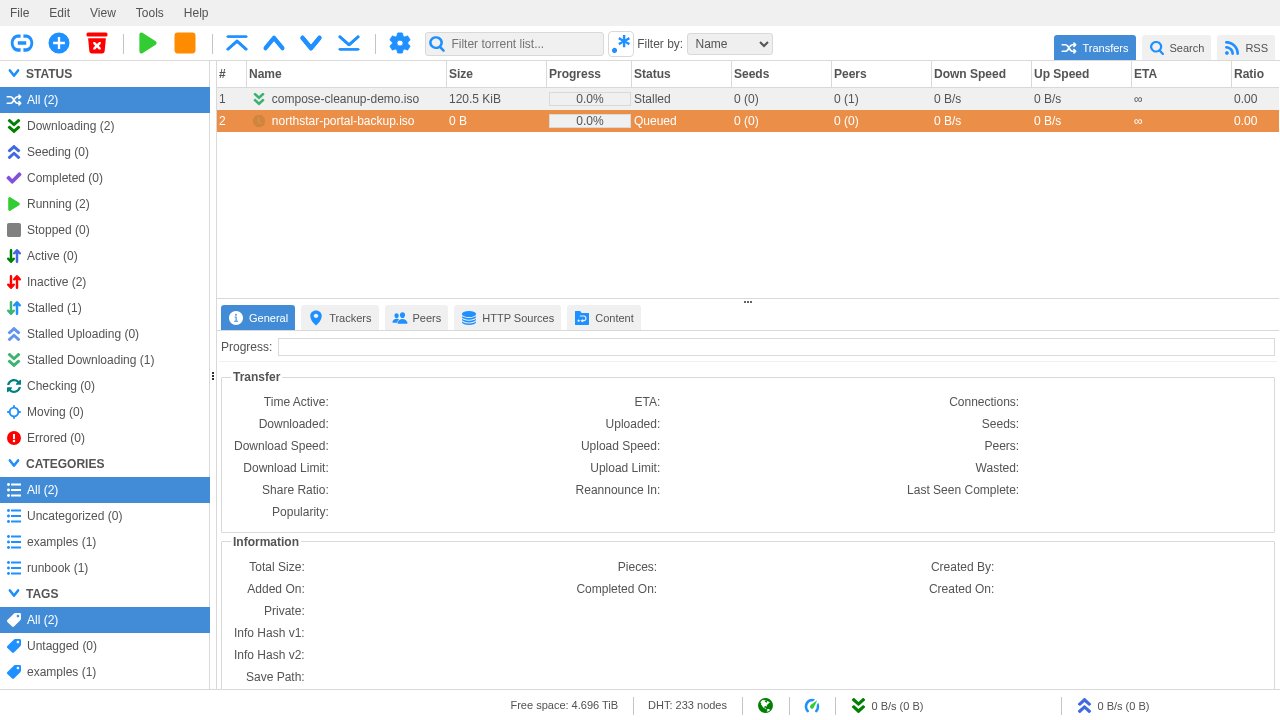
Manage long-running downloads through a private web interface when controlled transfers are part of the technical workflow.
Extend
A module can be broad or deliberately narrow. The active catalogue now includes private metasearch and operator-managed per-user workloads alongside specialist APIs and application services.
Index and query logs or application records through a private search cluster with an API your services can build on.
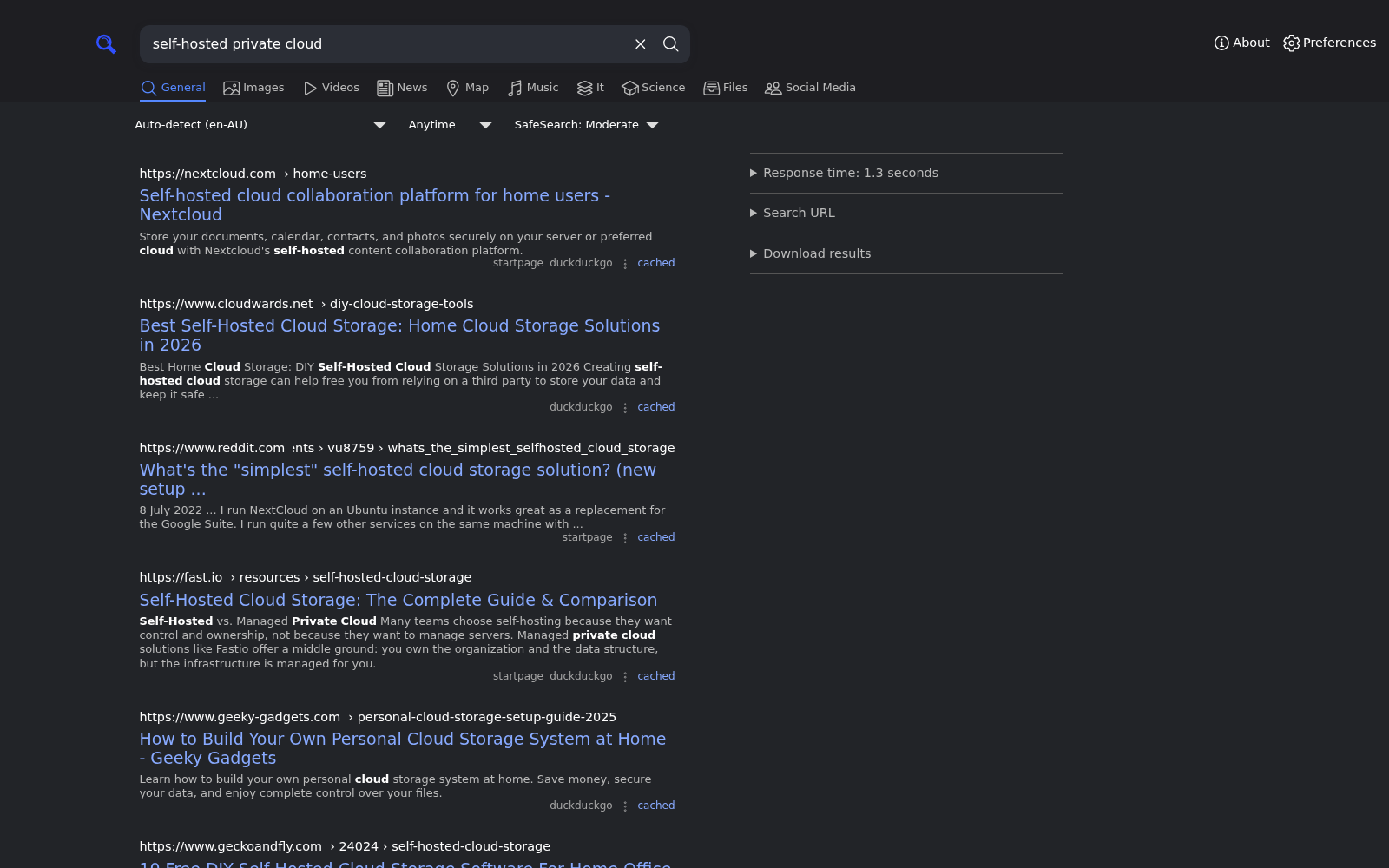
Run the official SearXNG container behind the shared Caddy and Keycloak route, with both browser and JSON search output.
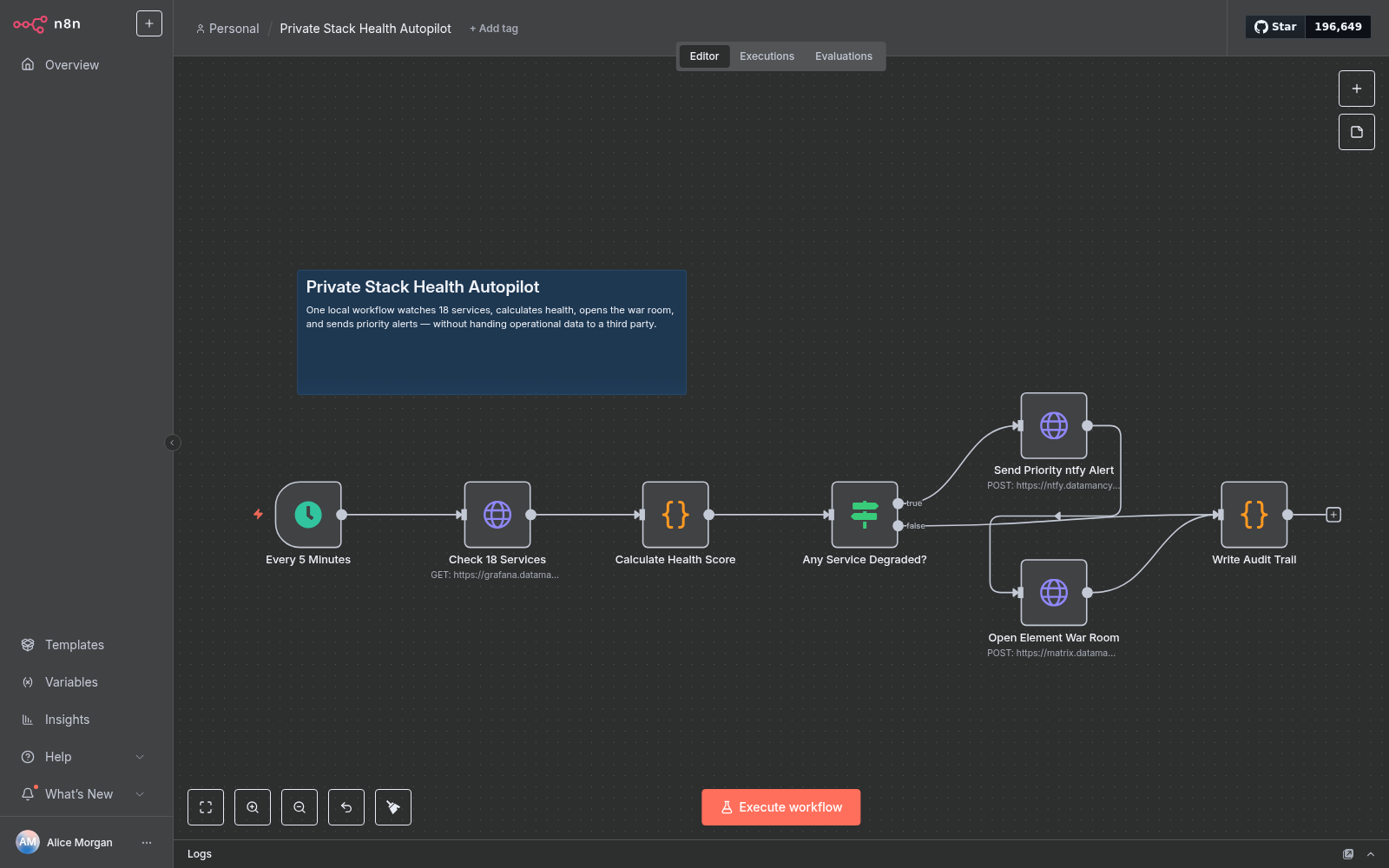
Create persistent per-user n8n instances on wildcard subdomains, with Caddy edge SSO and a separate Postgres role and database for each instance.
Expose a focused legal-research capability to compatible AI clients without turning it into a general-purpose application.
Provide audio, video, and low-latency data transport for applications that need calls or other live sessions.
Host a Bitwarden-compatible vault for passwords, passkeys, and controlled credential sharing.
Connect sensors, devices, dashboards, and local automations without making a vendor cloud the centre of the system.
Declare its runtime files, configuration, dependencies, and tests; pin the source; then let it follow the same build and verification path.
Behind the scenes
Edge security, log collection, shared runtime setup, mail transport, and test execution still need owners and contracts. Packaging them as modules keeps those decisions versioned, selectable, and testable too.
Read edge traffic logs, identify abusive patterns, and feed remediation decisions back to the public edge.
Run full-stack checks in a dedicated rootless Podman domain so test workloads do not share the application socket.
Provide the networks, paths, and common runtime pieces selected services need before their own units start.
Keep service logs in one queryable store so operators can move from a Grafana panel to the relevant records.
Collect host and service metrics and logs, then forward them to Prometheus-compatible and Loki backends.
Handle private mail submission, delivery, and mailbox access when email belongs inside the stack.